The language explosion: Chips Please Mama

Plate of chips (french fries) with a green plastic fork

“Chips please Mama.”

 “No chips tonight, DorkySon.”

 “Chips please Mama.”

 “No chips tonight DorkySon. Get out of the freezer please.”

 Silence….

 “Oooooooh! DorkySon’s fingers stuck in freezer Mama!”

There is something of a language explosion going on over here. I know that all parents must go through this, but I find it amazing that DorkySon, who a few months ago was unable to join more than two words together, is now able to spout complete sentences, and communicate exactly what he wants to me. Continue reading

The reality of an age gap relationship: life with my husband who is 35 years older

A black and white photo of a tree trunk on which someone has written 'love never dies'. This photo accompanies an article about relationships with large age gaps.

This essay about being in a relationship with a large gap was originally published in the Family section of The Guardian on Saturday May 21st 2011. A shorter version also appeared on Offbeat Mama in February 2011.

As a result of writing about our age gap marriage I get emails almost every week from other people around the world who are looking for advice on their own situation. I’ve written about this experience as an accidental Dear Abby in a piece for the Washington Post

My husband is a beat poet, a professional fundraiser, and the proudest father I’ve ever known. He also happens to be 35 years older than me, and 60 years older than our son. Somewhat ironically, his name is Young.

Believe me, if you had asked me five years ago who I imagined marrying and starting a family with, a man old enough to be my own father would not have been top of the list. And if a friend had confided to me that they were considering entering a relationship with such a significant age difference, I would have done my gentle best to discourage them. But here we are, coming up to our fourth wedding anniversary, and still recovering from our son’s second birthday party. Love is a wonderful and surprising thing, and as we tell people who ask how we met, we just kinda bumped and stuck.

To those on the outside, there are many disadvantages to our unconventional relationship. The mistake people make is thinking that we haven’t given consideration to those ourselves. Of course we’ve thought about the future, of course we know that things won’t always be as easy and fun as they are now, and of course we realise that we look a little odd when we go out… We dated for six months before moving in together, and several nights a week we would linger over dinner, drinking wine, talking about all the reasons we shouldn’t commit to each other. It is a standing joke between us that, due to those six months, there is no good restaurant in Edinburgh that I haven’t cried in. Continue reading

Things they don’t tell you about parenting… Part 2

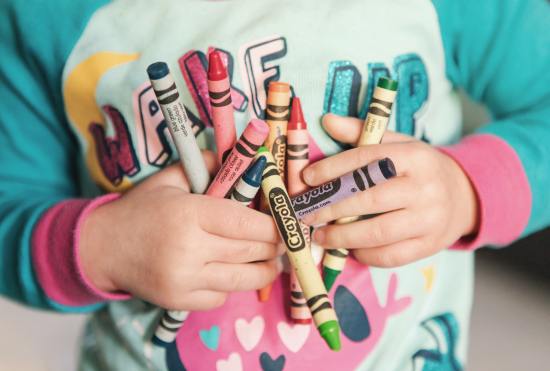
toddler holding assorted coloured crayons

A couple of days ago I posted Part 1 of ‘Things they don’t tell you…’ written when DorkySon was just a few months old. This is Part 2, covering the additional lessons I’ve learned over the last couple of years.

I was foolish enough to envisage that DorkySon child would be ‘part of my life’. That he would have his own room, where all his belongings would stay, and that there would still be parts of the house, and of my life, untouched by him.

Ha! Not so! DorkySon shares everything with me. He stashes his Lego bricks in my pillowcase. He sneezes, coughs and splutters his bodily fluids all over me, just to make sure that whatever cold he has, I catch too. And if he is eating something he doesn’t like, he will expect me to stick my hand out and catch it, when he spits it out.

In return, I am expected to share everything with DorkySon. Nothing is my own anymore. He will refuse his own sandwich but insist on eating half of mine. He will want to try every cleanser, toner and moisturiser I bring in the house, cheerfully oblivious to their price tags. He empties my underwear drawer, rearranges my bookshelves, and when I’ve got visitors he has been known to walk into the room with a handful of Kotex, saying “Dat?”.

So, acknowledging that having a child is all-consuming, life-altering, and very messy, here are ten other important lessons that I’ve learned during my time with DorkySon. Continue reading

Imperfect Parenting

Child with toy on head surrounded by colourful plastic balls.

When DorkySon was about six months old, we started taking him to swimming lessons, and I remember being awed by the number of mothers who showed up at the pool every week with perfectly painted toenails, immaculate bikini lines, and tummies that had returned to pre-baby muscle tone.

Jeez, I thought, where do they find the time to do that? I thought of my own days, which were still flying by in a haze of feeds and laundry and naps. Some days I found time to smear a bit of moisturiser on my cheeks, but that was about the extent of my personal grooming.

In truth though, it had little to do with the demands of DorkySon. Even before his arrival, when I had oodles of spare time, I didn’t have pedicures. I had never been the kind of person who could organise her life to the extent where it felt like I ‘had it all’. Something always had to slip. Continue reading

Breast is best… but there’s no need to keep shouting about it

Grayscale photo of woman holding a small baby

Ahhhh. A week into my life as a blogger, and already I get to tackle one of the biggies. Breastfeeding!

You’d think after watching the fallout from Mairi Campbell-Jack’s thought-provoking post over on A Burdz Eye View recently, I’d know better, but hey, I will claim new blogger naievety and go for it.

*Takes a deep breath*

If I have to read the results of another study, giving yet another reason why breast is best, I will poke my eyes out. The latest one, which is splashed all over the papers today, states that breastfed babies develop fewer behaviour problems in later life.

Don’t get me wrong, I think breastfeeding, in general, is awesome. But what is the point of these studies? Who are all the resulting articles targeted at?

There are many women who, for one reason or another, choose not to breastfeed. I truly can’t believe that reading a story such as the one on the BBC website will do anything to change their minds.

There are many women who would very much like to breastfeed, but for one reason or another are unable to. As far as I can see, an article like this just rubs salt in the already painful wounds of such women, and increases the burden of guilt they may already be carrying.

There are many women who have successfully breastfed for anything from a few weeks to a few years, and are happy with their decision, but don’t feel the need to shout it from the rooftops. They, like me, probably roll their eyes when they see yet another headline about breastfeeding, and keep scrolling. (Or, y’know, go online and write a big ranty blog post about it…)

And then there are those other women, who dress their babies in t-shirts that say “I Love Mummy Milk” and raise an eyebrow disapprovingly when that one poor woman at the first antenatal class reunion brings out a bottle of formula. They are the only ones that care about the results of studies like this – because it gives them one more reason to feel good about themselves and one more link to post on their Facebook page.

I would truly love to see breastfeeding rates in the UK improve, because they are shockingly low. It is hard to argue with the fact that breastfeeding is good for your child’s health. In the current economic climate I would think the fact that it’s free would be a real selling point. But telling people that their children will be better behaved in five years if they breastfeed them now? It’s not going to work.

I would far rather see the money spent on such studies going towards initiatives that provide genuine breastfeeding support for those that need it; more health visitors working in communities where the rates are low, more breastfeeding specialists on maternity wards, more support groups, mentoring and buddying schemes…

Let’s stop finding new sticks to beat non-breastfeeders with, and instead spend our intellect, our money and our energy on more positive solutions. If we manage to do that, then maybe a few years down the line we will end up with a generation of impeccably behaved children. Somehow I doubt it, but the other benefits will be immeasurable.

Photo by Jordan Whitt on Unsplash